For consultation and purchase, please use the following methods.
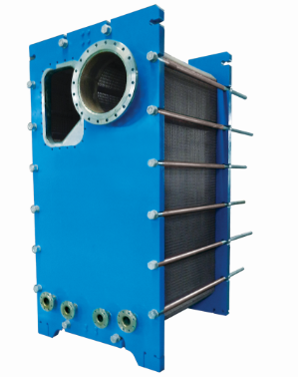
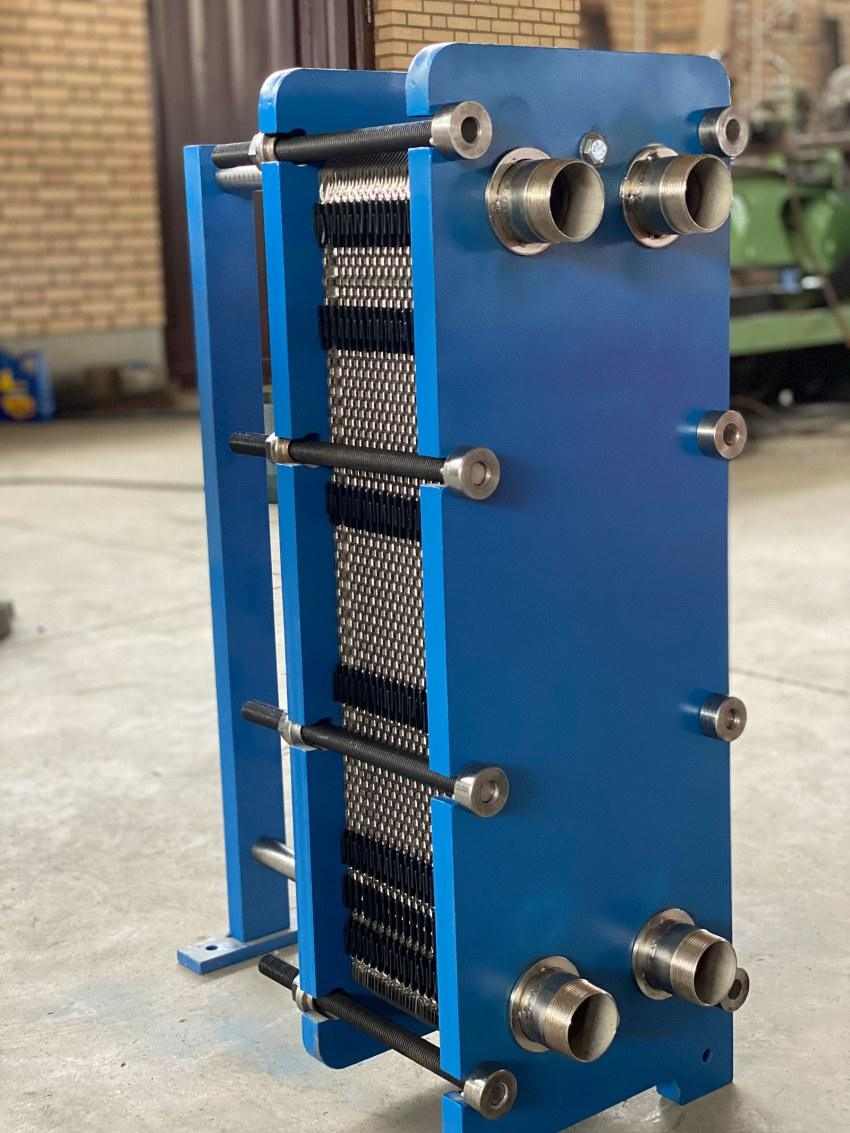
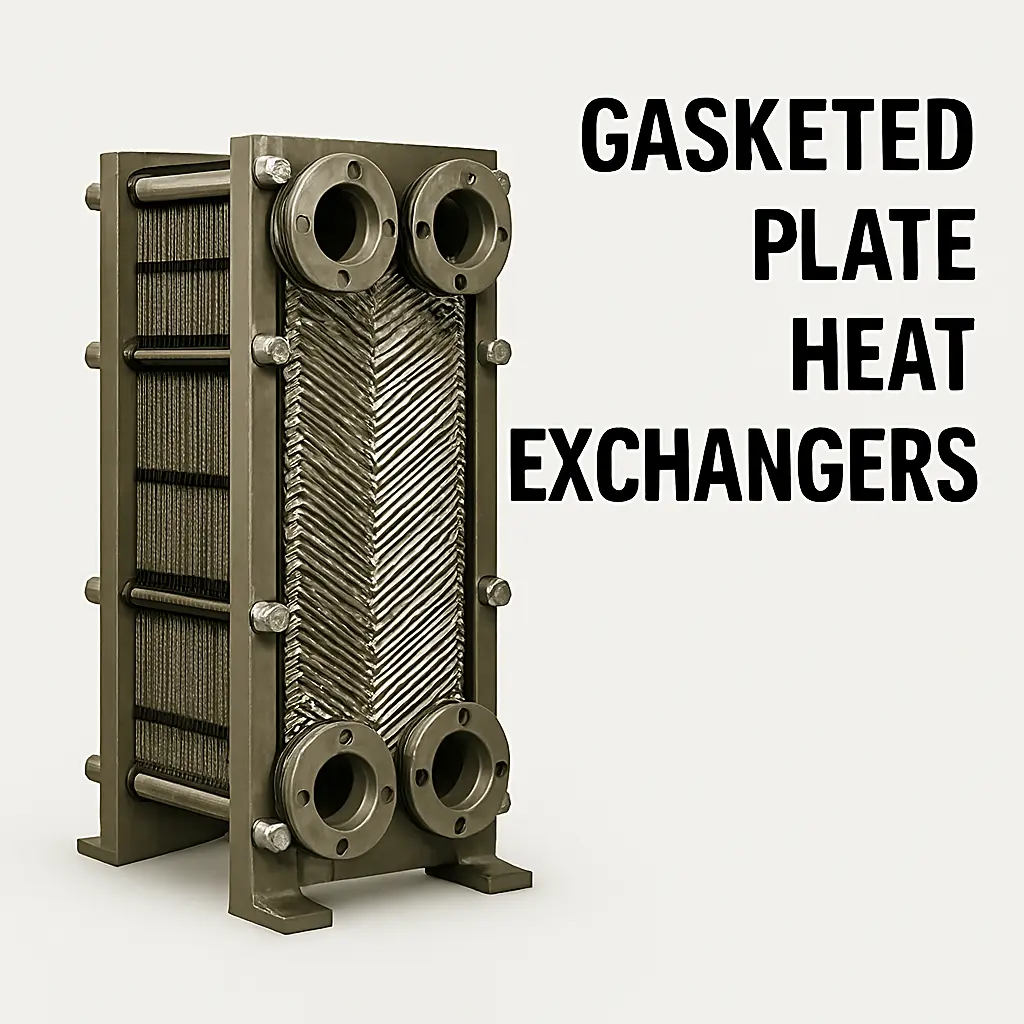
Gasketed plate heat exchangers are the most common and economical types of exchangers, designed to transfer heat between two fluids without direct contact. This type of exchanger consists of corrugated metal plates separated by special gaskets and placed inside a compact frame. In addition to sealing, the gaskets also guide the flow of fluids.
The special design of the plates creates turbulent flow in the fluid and increases the contact surface, which significantly increases the heat transfer efficiency. These exchangers are easy to open, clean and replace parts and are very suitable for various industrial and construction applications.
—
Key Features
– Openable structure for service and cleaning
– High efficiency in heat transfer with minimal pressure drop
– Compact and lightweight design with easy installation
– Ability to replace gaskets and plates individually
– Suitable for fluids with medium temperature and pressure
Applications
– Building heating and cooling systems
– Food, pharmaceutical and beverage industries
– Steam and hot water production units
– Chemical and process industries
– Energy and heat recovery systems
Advantages of using a gasketed exchanger
– Reduced energy consumption and increased efficiency
– Easy maintenance and reduced repair costs
– Flexibility in design and capacity expansion
– Compliance with health and industrial standards
Ordering and Technical Consulting
We are ready to supply all types of gasketed heat exchangers in different brands and capacities. For accurate selection, just let us know the type of fluid, operating temperature, desired capacity and environmental conditions.
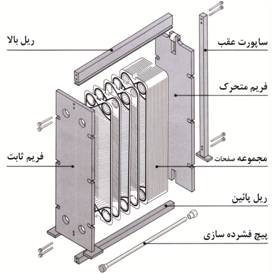
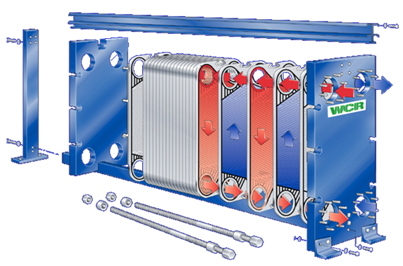
Gasketed plate heat exchangers (GPHE) or gasketed plate heat exchangers, which are over 100 years old, consist of a number of pressed plates of various shapes that are placed between two fixed and movable steel plates (frames) and are aligned by two upper and lower rails. The set of plates located between the fixed and movable frames are pressed together by a number of screws. Between each plate is a special gasket whose role is to seal the two plates and create a channel for the passage of fluids. The set of plates, while compressed together, create 4 channels for the entry and exit of hot and cold fluids. These fluids move alternately in the channels formed by the plates, and heat transfer occurs with high efficiency.
To produce gasket heat exchangers, different materials are used for the plates, depending on the specific application and needs. Common materials used include 316 stainless steel, 304 stainless steel, titanium, nickel, etc.
Tightening operation of a PHE:
Hydraulic wrench for tightening plate exchangers
Tightening large plate exchangers requires the teamwork of several experienced and efficient workers and can take hours.
By using a hydraulic system to compress a heat exchanger, the assembly of a large exchanger can be completed in a much shorter time and with much less energy consumption. Hydraulic systems for compressing plate exchangers are manufactured in two sizes with a capacity of 100 and 160 tons and can be used on all types of plate exchangers.
The thickness of the gasket exchanger plate is determined by consumption.
For consultation and purchase, please use the following methods.